
TENS vs. Microcurrent: Key Differences You Need to Know
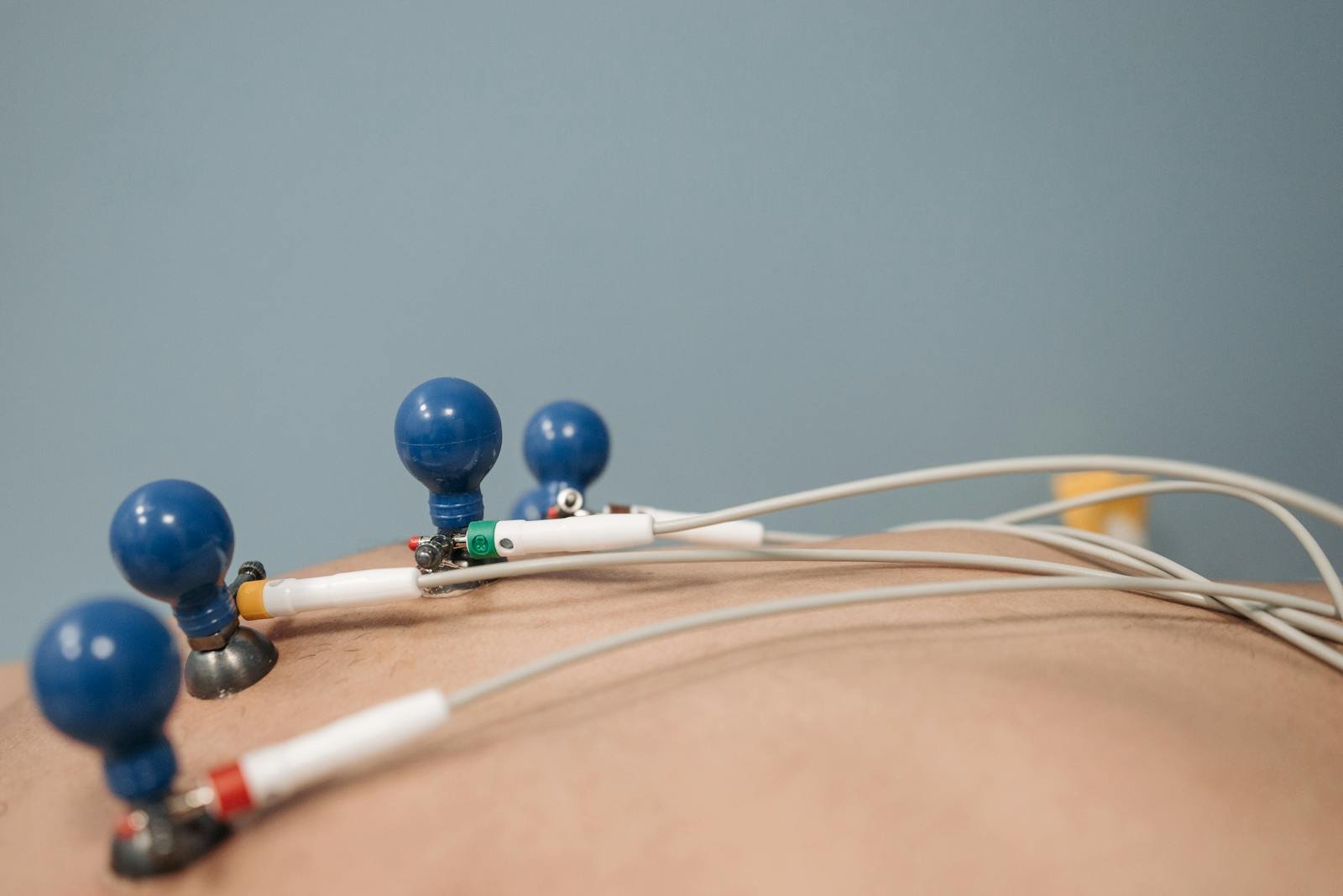
TENS and microcurrent are both electrical therapies used for pain management — and they’re both cleared by the FDA for that purpose. But they work through completely different biological mechanisms, at completely different current levels, producing completely different effects. Choosing the wrong one for your situation means missing out on the benefits the right one could provide.
“Is microcurrent the same as TENS?” is one of the most common questions we get. The short answer is no — they differ by a factor of 1,000 in current intensity and operate through fundamentally different pathways. TENS blocks pain signals; microcurrent supports cellular repair. Understanding this distinction is the key to choosing correctly.
In this guide
Quick answer: the fundamental difference
TENS delivers current in the milliamp range (1–80 mA). You can feel it — it produces tingling, buzzing, or visible muscle contraction. It works by overwhelming sensory nerves to block pain signals from reaching the brain. When you turn it off, the pain typically returns. TENS is a pain blocker.
Microcurrent delivers current in the microamp range (10–600 µA) — roughly 1,000 times weaker than TENS. You cannot feel it. It works by matching the body’s own bioelectric currents to support ATP production, cellular repair, and tissue healing. Effects often persist after the device is turned off. Microcurrent is a cellular healer.
That’s the core distinction. Everything else — session length, sensation, best applications, research base — flows from this fundamental difference in mechanism and intensity.
TENS explained
TENS stands for Transcutaneous Electrical Nerve Stimulation. It’s the most widely used electrotherapy in mainstream medicine, with decades of clinical use and tens of millions of devices sold worldwide.
How TENS works
TENS operates on the gate control theory of pain, proposed by Melzack and Wall in 1965. The theory states that non-painful sensory input can “close the gate” on pain signals traveling through the spinal cord to the brain. By flooding sensory nerve fibers with electrical stimulation, TENS effectively overwhelms the nervous system’s pain transmission pathway — the brain receives so much non-pain input that it can’t process the pain signals simultaneously.
A secondary mechanism involves endorphin release. Low-frequency TENS (2–5 Hz) is thought to trigger the release of endogenous opioids (the body’s natural painkillers), which can provide longer-lasting pain relief.
Critically, TENS does not promote tissue healing. It manages the symptom (pain) without addressing the underlying cause. This isn’t a criticism — pain management is valuable — but it’s a real limitation worth knowing.
TENS characteristics
Current level: 1–80 milliamps (mA)
Sensation: Clearly perceptible — tingling, buzzing, or muscle twitching. Intensity is adjusted until stimulation is felt but not painful.
Mechanism: Nerve stimulation (gate control) + endorphin release
Primary effect: Temporary pain relief
Duration of relief: Typically limited to during use and shortly after. Some endorphin-mediated relief may last hours.
Healing effect: Minimal to none at the cellular level
Typical session: 20–60 minutes, adjustable intensity
Microcurrent explained
Microcurrent therapy — also called MENS (Microcurrent Electrical Nerve Stimulation) or MCT (Microcurrent Therapy) — delivers current at levels approximately equal to what healthy cells generate naturally. This is a fundamentally different approach from TENS. For a deep dive, see our complete microcurrent guide.
How microcurrent works
Microcurrent operates on the principle of bioelectric compatibility. Your cells naturally generate and respond to electrical currents in the microampere range. When tissue is injured, its bioelectric properties change — injured cells have altered membrane potentials and reduced ability to produce ATP (cellular energy). Microcurrent at 10–600 µA supplements the body’s endogenous currents, supporting cellular processes rather than overriding them.
The foundational research by Cheng et al. (1982) demonstrated that currents in the 10–1,000 microampere range increased ATP production by up to 500% in treated tissue. Protein synthesis and amino acid transport also increased significantly. Crucially, ATP production no longer rose once current climbed past roughly 1,000 µA, and it fell below baseline at 5,000 µA (5 mA) — demonstrating that, beyond a point, more current isn’t better.
This biological mechanism means microcurrent doesn’t just manage pain — it may support the actual repair process at the cellular level by providing cells with the energy and building blocks they need to heal.
Microcurrent characteristics
Current level: 10–600 microamps (µA) — 1/1000th of TENS
Sensation: Sub-sensory. You cannot feel it. Some users report a subtle warmth or relaxed “floaty” feeling, but there is no tingling, buzzing, or muscle contraction.
Mechanism: ATP production enhancement, cellular membrane normalization, protein synthesis support
Primary effect: Cellular repair and healing support, with secondary pain reduction as healing progresses
Duration of relief: Effects often persist and may be cumulative over multiple sessions. Some conditions show lasting improvement.
Healing effect: Significant — increased ATP, protein synthesis, amino acid transport, and collagen production documented in research
Typical session: 20–60 minutes, sub-sensory (you won’t feel any stimulation)
Side-by-side comparison
| Feature | TENS | Microcurrent |
|---|---|---|
| Current intensity | 1–80 milliamps | 10–600 microamps |
| Relative strength | 1,000x stronger | 1,000x gentler |
| Can you feel it? | Yes — tingling, buzzing | No — sub-sensory |
| Causes muscle contraction? | Yes, at higher intensities | No |
| Primary mechanism | Gate control (nerve blocking) | ATP enhancement (cellular) |
| Pain relief type | Temporary symptom masking | Progressive healing support |
| When effects stop | Soon after turning off | May persist and accumulate |
| Effect on ATP | No increase above ~1 mA; declines at 5 mA | Increases ATP by up to 500% |
| Wound healing | Not indicated | Published evidence of benefit |
| FDA status | Cleared for pain | Cleared for pain (TENS category) |
| Research volume | Extensive (thousands of studies) | Emerging (60+ studies, mostly small) |
| Typical device cost | $30–$200 | $200–$3,000+ |
The critical Cheng finding
The Cheng 1982 study didn’t just show that microampere currents increase ATP — it also showed that the effect is dose-dependent: ATP gains peaked between 100 and 500 µA, leveled off once current passed about 1,000 µA, and fell below baseline at 5,000 µA (5 mA). This dose-response is central to understanding why the two modalities are not interchangeable. Once current reaches the milliamp range, it no longer augments cellular energy production the way microamp current does. This is why TENS blocks pain but doesn’t heal tissue, while microcurrent may heal tissue but doesn’t provide the same immediate pain-blocking sensation.
When to use TENS vs. microcurrent
Choose TENS when you need:
Immediate, on-demand pain relief. TENS is faster-acting for acute pain episodes. If you need to function right now despite pain, TENS provides immediate symptomatic relief while active.
Chronic pain management as an opioid alternative. TENS has a strong evidence base as a non-pharmacological pain management tool. For conditions where pain is the primary concern and healing isn’t expected (e.g., chronic arthritis, terminal illness), TENS provides drug-free relief.
Labor pain. TENS is one of the few electrical therapies with specific evidence for labor pain management.
Budget-constrained pain management. TENS devices are widely available for $30–$100, making them the most affordable electrotherapy option.
Choose microcurrent when you need:
Tissue healing and recovery support. Post-surgical recovery, wound healing, tendon/ligament injuries, and conditions where actual tissue repair is the goal. Microcurrent’s ATP enhancement directly supports cellular repair processes.
Chronic conditions that haven’t responded to other treatments. Fibromyalgia, chronic myofascial pain, neuropathic pain, and persistent soft tissue injuries are areas where frequency-specific microcurrent (FSM) has shown particular promise.
Muscle recovery and athletic performance. DOMS (delayed-onset muscle soreness) reduction, muscle fatigue recovery, and pre-event preparation. Published research shows FSM significantly outperformed sham treatment for DOMS.
Skin and aesthetic applications. Microcurrent facial toning, collagen stimulation, and wound scar reduction are supported by published studies. TENS is not used for aesthetic applications.
Conditions where you want cumulative, progressive improvement rather than temporary symptom masking. Microcurrent effects may build over multiple sessions as cellular repair progresses.
Can you use both?
Yes — and for many chronic pain conditions, using both strategically can be more effective than either alone.
A practical combined protocol might look like this: use TENS for immediate pain relief during acute flare-ups or when you need to function despite pain, and use microcurrent for ongoing healing support between flare-ups to address the underlying tissue condition. TENS manages the symptom today; microcurrent works on the root cause over time.
The key consideration is not to use them simultaneously on the same area. TENS-level current would overwhelm the subtle bioelectric effects that make microcurrent work. Use them at different times — for example, TENS during the day for pain management and microcurrent in the evening for recovery and healing.
Research by Kang, Jeon, and Lee (2015) directly compared microcurrent and TENS for cumulative muscle fatigue recovery and found that microcurrent significantly reduced fatigue and muscle tone while TENS showed no significant effect compared to rest alone. This suggests the two modalities genuinely work through different mechanisms with different outcomes — they’re complementary rather than interchangeable.
Device examples
TENS devices
Budget: NURSAL, iReliev, Belifu — $25–$50 on Amazon. Effective for basic pain relief.
Mid-range: OMRON, AccuRelief — $50–$150. Better build quality and electrode design.
Clinical-grade: Biomedical Life Systems, EMPI — $200+. Professional-quality units often used in physical therapy clinics.
Microcurrent devices
Consumer: Healy ($500–$3,000+) — wearable frequency device with extensive program library.
Clinical FSM: Precision Microcurrent devices — dual-channel, used by trained FSM practitioners.
Aesthetic: NuFACE, ZIIP, MyoLift — $200–$500. Microcurrent facial toning devices for skincare applications.
Note that some devices marketed as “TENS/microcurrent combo” exist, but be cautious — verify that the device actually operates in the microamp range for microcurrent mode and doesn’t simply offer a lower milliamp TENS setting. True microcurrent operates below 1,000 µA (1 mA).
Our recommendation
The bottom line
For immediate pain relief with a proven mechanism: TENS. It’s affordable, widely available, well-studied, and provides reliable short-term pain management. If you’re in pain right now and need relief today, TENS is the straightforward choice.
For healing support and long-term recovery: Microcurrent. If your goal is tissue repair, wound healing, injury recovery, or addressing conditions that haven’t responded to standard treatment, microcurrent’s cellular-level mechanism offers something that TENS fundamentally cannot.
For the best of both worlds: Use TENS for acute pain management and microcurrent for ongoing healing — just not simultaneously on the same area. This combined approach gives you immediate symptom relief while supporting the underlying recovery process.
Neither technology is universally “better” — they serve different purposes through different mechanisms. The best choice depends entirely on what you’re trying to accomplish. Knowing the distinction puts you ahead of most people, who confuse the two or assume they’re interchangeable.
For more on how microcurrent and other frequency technologies compare, see our complete guide to frequency technology types. For the published research supporting microcurrent’s cellular-level effects, see our microcurrent research reference covering 60+ peer-reviewed studies.
Related reading on Frequency Tech
Frequently Asked Questions
What is the difference between TENS and microcurrent?
TENS and microcurrent are both FDA-cleared electrical therapies for pain, but they work through fundamentally different mechanisms at very different intensities. TENS delivers current in the milliamp range (1-80 mA) that you can feel, and it works by overwhelming sensory nerves to block pain signals from reaching the brain. Microcurrent delivers current in the microamp range (10-600 micro-amps) – roughly 1,000 times weaker and sub-sensory – and works by matching the body’s own bioelectric currents to support ATP production and cellular repair. In short, TENS is a pain blocker while microcurrent is a cellular healer.
Which is better for pain, TENS or microcurrent?
Neither is universally better – it depends on what you are trying to accomplish. TENS is faster-acting and well-suited for immediate, on-demand relief of acute pain, providing reliable short-term symptom management while it is active. Microcurrent works more gradually by supporting tissue healing, so it may be the better fit when the goal is recovery or addressing conditions that haven’t responded to standard treatment. If you need relief right now, TENS is the straightforward choice; for long-term healing support, microcurrent offers something TENS fundamentally cannot.
Can you use TENS and microcurrent together?
Yes, and for many chronic pain conditions using both strategically can be more effective than either alone. A practical approach is to use TENS for immediate pain relief during flare-ups and microcurrent for ongoing healing support between them. The key caution is not to use them simultaneously on the same area, since TENS-level current would overwhelm the subtle bioelectric effects that make microcurrent work. Using them at different times, such as TENS during the day and microcurrent in the evening, keeps the two complementary.
Is microcurrent stronger than TENS?
No – microcurrent is actually about 1,000 times gentler than TENS, not stronger. TENS operates in the milliamp range at levels you can clearly feel as tingling or buzzing, while microcurrent operates in the microamp range below the threshold of sensation. Being weaker is the point: microcurrent matches the body’s natural bioelectric currents to support cellular repair, whereas the research shows that once current climbs into the milliamp range it no longer enhances ATP production the way microamp current does. They are not interchangeable, and more current is not better.
Disclaimer: This article provides educational information about TENS and microcurrent technologies. It does not constitute medical advice and is not intended to diagnose, treat, cure, or prevent any disease. Both TENS and microcurrent devices should be used under the guidance of a qualified healthcare professional, especially for chronic pain conditions. Neither technology should be used with pacemakers or implanted electrical devices. See our safety guide for complete contraindication information. Frequency Tech is an independent review site — see our Affiliate Disclosure for our policies.