
Frequency Technology Explained: A Beginner’s Guide (2026)
Quick answer
Frequency technology covers devices that use electromagnetic pulses (PEMF), tiny electrical currents (microcurrent), light (red light therapy) or sound (binaural beats) to support the body's own processes. PEMF has the strongest research base, including FDA approval for bone healing; a basic TENS unit is the cheapest well-evidenced option; bioresonance and remote frequency claims remain unproven. Start with an affordable device, use it consistently, and treat it as a complement to medical care rather than a replacement.
You’ve seen them on Instagram. You’ve read the testimonials. Maybe a friend swears their little device changed their sleep, eased their discomfort, or helped with stress. But when you start digging into frequency technology, you hit a wall of confusing jargon, extravagant claims, and conflicting opinions.
This guide is here to cut through that noise. No hype, no dismissal — just a clear, honest explanation of what frequency technology is, how it works, what science supports it, and how to decide if it’s worth exploring for yourself.
Table of Contents
- What Are Frequencies, and Why Do They Matter?
- A Brief History of Frequency Technology
- How Frequency Wellness Devices Work
- What Does the Science Actually Say?
- Is Frequency Technology Safe?
- How to Get Started with Frequency Wellness
- Key Takeaways
- Frequently Asked Questions
What Are Frequencies, and Why Do They Matter?
Everything in the physical world vibrates. Atoms oscillate. Cells communicate through electrical signals. Your heart generates an electromagnetic field with every beat. Even the brain operates on measurable frequencies — delta waves during deep sleep, beta waves when you’re alert and focused.
This isn’t new-age philosophy. It’s basic physics. Every object has a natural resonant frequency — the rate at which it vibrates most efficiently. When you tap a wine glass and it rings, that’s resonance. When an opera singer hits a note that shatters that glass, they’ve matched its resonant frequency with enough energy to overwhelm it.
Frequency technology takes this principle and applies it to the human body. The core idea is straightforward: if cells, tissues, and organs each operate at optimal frequencies, then disruptions to those frequencies — caused by stress, poor sleep, environmental factors, or lifestyle — might be addressed by delivering supportive frequencies back to the body.
That’s the concept. The practice, as we’ll see, ranges from well-established applications to experimental territory where science is still catching up to the claims.
The electromagnetic spectrum is vast, stretching from extremely low frequency (ELF) waves all the way up to gamma rays. Frequency wellness devices operate in the lower end of this spectrum — typically between 0.5 Hz and 1,000 Hz — using very low-energy electromagnetic fields or electrical microcurrents. These are far below the frequencies used in medical imaging or radiation, which is why they’re generally considered safe for home use.
A Brief History of Frequency Technology
The idea that energy and vibration could support wellbeing is ancient — singing bowls, chanting, and vibrational rituals appear across cultures and centuries. But the modern story of frequency technology begins in the early twentieth century.
In the 1920s and 1930s, American inventors built some of the first “frequency generators,” working from the idea that every microorganism had a specific electromagnetic frequency which could be targeted without affecting surrounding tissue. That work generated enormous interest at the time, but it was never validated through rigorous clinical trials, and the devices were eventually condemned by the American Medical Association.
The underlying idea nonetheless persisted, branching into several streams of frequency-based technology that continue today.
In the 1970s and 1980s, Transcutaneous Electrical Nerve Stimulation (TENS) emerged as a mainstream pain management tool. TENS devices deliver low-voltage electrical currents through electrode pads placed on the skin, and they’ve become one of the most widely accepted forms of frequency-based technology. You can buy them at any pharmacy today. A large-scale systematic review and meta-analysis of 381 studies published in BMJ Open found moderate-certainty evidence that TENS reduces pain intensity compared to placebo, across many conditions.
Around the same time, Pulsed Electromagnetic Field (PEMF) technology was gaining traction in Europe. By 1979, the FDA had approved PEMF devices for supporting bone recovery in non-union fractures — bones that had failed to mend on their own. This was a significant milestone: an electromagnetic frequency technology with official regulatory backing and peer-reviewed research behind it.
The 2000s and 2010s saw a new wave of consumer-facing frequency devices. The Healy, launched by Healy World in Germany, became one of the most recognizable names in the space, marketing a portable microcurrent device with hundreds of frequency programs for everything from comfort support to emotional balance. PEMF mats from companies like BEMER and iMRS found growing audiences among wellness enthusiasts and biohackers.
Today, the frequency technology market is diverse and growing, encompassing microcurrent devices, PEMF systems, sound-based tools, and light-based approaches — each with its own method, evidence base, and community of advocates.
→ Related reading: 5 Types of Frequency Technology Explained
How Frequency Wellness Devices Work
Not all frequency devices are the same. Understanding the different types is essential for making an informed choice. Here’s a quick overview of the main categories.
Microcurrent and Individualized Microcurrent Frequency (IMF)
Microcurrent devices deliver extremely low-level electrical currents — typically less than one milliamp — to the body through electrodes placed on the skin, wrists, or earlobes. The concept is that these tiny currents can influence cellular processes, support ATP (energy) production, and promote the body’s natural recovery mechanisms.
The Healy device is the most well-known example. It uses what it calls Individualized Microcurrent Frequency (IMF) technology, running programs that deliver specific frequency patterns chosen through an app. Other microcurrent devices include NuCalm and various Frequency-Specific Microcurrent (FSM) machines used by practitioners.
The FDA has cleared the Healy as a Class II medical device for the temporary relief of acute, chronic, and arthritis-related pain. However, many of the broader wellness claims made about microcurrent devices — emotional balance, mental clarity, energy optimization — go beyond what the FDA has evaluated.
→ Related reading: Healy Device Review 2026: An Honest, In-Depth Assessment
Pulsed Electromagnetic Field (PEMF) Technology
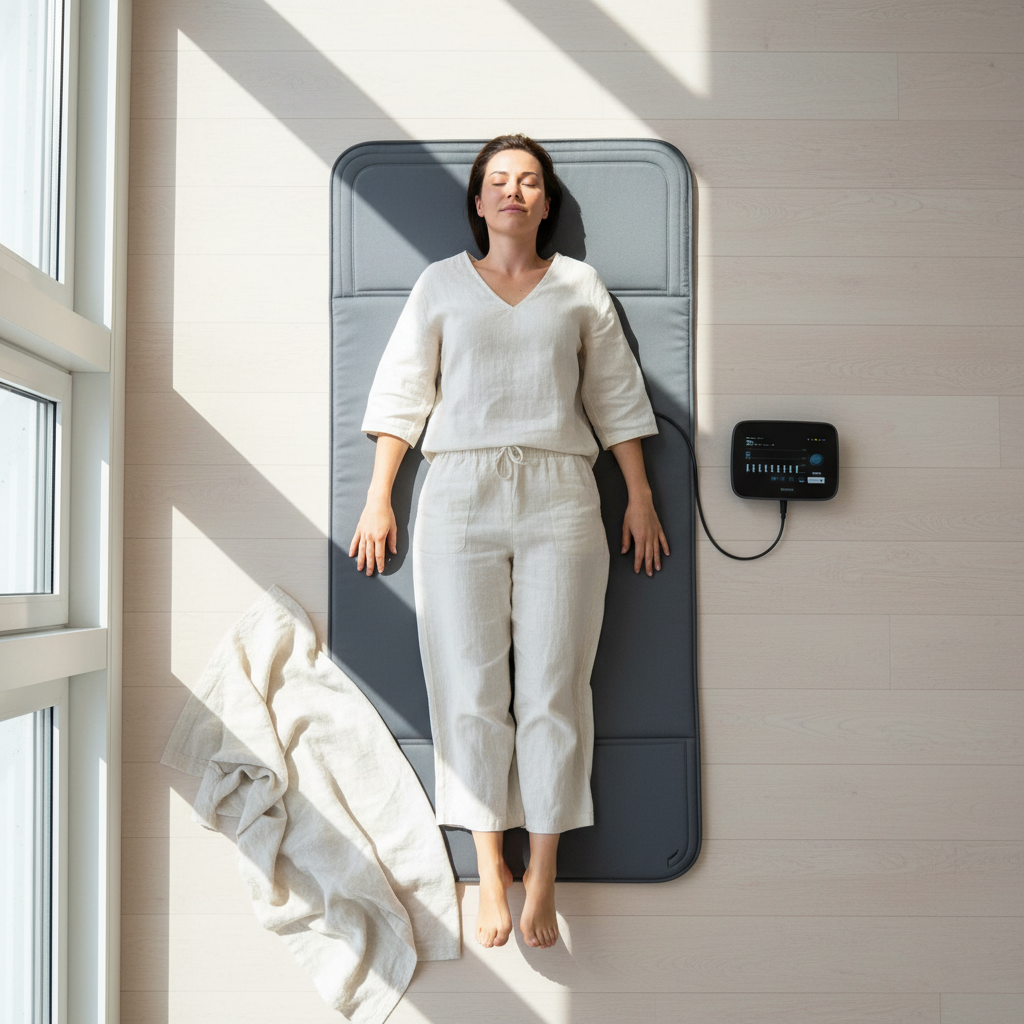
PEMF devices generate low-frequency electromagnetic pulses that penetrate through the body’s tissues. Unlike microcurrent devices, which require skin contact through electrodes, PEMF systems can deliver their frequencies through mats, pads, or rings that you sit or lie on.
The principle behind PEMF is that pulsing electromagnetic fields can stimulate cellular activity, support circulation, and promote the body’s natural balance. Of all the frequency technology categories, PEMF has the strongest body of published research. A peer-reviewed study published in JAAOS Global Research & Reviews confirmed that PEMF has been FDA-approved since 1979 for bone recovery, with reported success rates between 73% and 85% for non-union fractures.
Notable PEMF devices include the BEMER Pro, iMRS 2000, and HealthyLine mats. Prices range from a few hundred dollars for basic units to several thousand for professional-grade systems.
Sound and Vibrational Approaches
Sound-based frequency technology includes tools like tuning forks, singing bowls, binaural beats, and Solfeggio frequency recordings. The idea here is that specific sound frequencies can influence brainwave patterns, promote relaxation, and support emotional wellbeing.
Binaural beats are among the most studied. They work by playing slightly different tones in each ear through headphones, creating a perceived beat at the difference frequency. For example, a 200 Hz tone in one ear and a 210 Hz tone in the other produces a 10 Hz binaural beat, which falls in the alpha brainwave range associated with relaxation.
Research on binaural beats is mixed but growing. Some studies suggest they can reduce anxiety and improve focus, while others show minimal effects. Sound-based frequency technology is also the most accessible and affordable entry point into frequency wellness — many binaural beats apps are free.
Light and Photobiomodulation
Red light and near-infrared devices use specific light frequencies to stimulate cellular processes. Often called photobiomodulation, this approach has a growing evidence base for applications including skin health, inflammation support, and muscle recovery.
Devices range from handheld wands to full-body panels from companies like Joovv and Mito Red Light. While technically operating at much higher frequencies than the other categories (in the terahertz range), photobiomodulation shares the same fundamental principle: delivering specific frequencies to influence biological function.
→ Related reading: 5 Types of Frequency Technology Explained
What Does the Science Actually Say?
This is where honest conversation matters. The frequency wellness space includes everything from FDA-cleared devices to products making claims that no research supports. Understanding where the evidence stands helps you make informed decisions.
Strong Evidence — Established and Recognized
Some frequency-based technologies have solid scientific backing and regulatory recognition. TENS (Transcutaneous Electrical Nerve Stimulation) is widely accepted for pain management, with decades of research and FDA clearance. A comprehensive meta-analysis of 381 studies found moderate-certainty evidence supporting its effectiveness for both acute and chronic pain, without serious adverse events.
PEMF technology is FDA-cleared for supporting bone recovery in non-union fractures, and a growing body of peer-reviewed studies supports its potential for comfort and inflammation management. A 2021 review published in the International Journal of Molecular Sciences mapped the molecular pathways behind PEMF-assisted bone healing — including activation of adenosine A2A receptors — while noting that further trials with standardized parameters are still needed to firm up the clinical evidence.
Microcurrent technology has published research supporting its use in wound recovery and tissue support, and some frequency-specific microcurrent protocols are used by licensed practitioners.
These applications represent the most credible end of the frequency technology spectrum. They’ve been studied in controlled settings, published in peer-reviewed journals, and gained regulatory acceptance.
Promising but Preliminary
A middle tier of evidence exists for several applications that show potential but need more research. PEMF for sleep improvement and mood support has shown positive results in smaller studies, but large-scale randomized controlled trials are limited. Frequency-specific microcurrent for conditions like fibromyalgia has been explored with encouraging early results, though the evidence base remains small. Some laboratory studies have shown that specific electromagnetic frequencies can inhibit certain cellular processes — but these were conducted in labs on cell cultures, not in human studies. The gap between lab results and real-world application is enormous.
Limited or No Scientific Support
Some claims common in the frequency wellness space have little or no scientific backing. Bioresonance — the idea that a device can “scan” your body’s frequencies and identify imbalances — lacks a validated scientific mechanism. Several scientific reviewers have described this concept as unsubstantiated. “Information field” technology, which claims to analyze and influence a non-physical energy field around the body, has no basis in established physics or biology. Remote frequency delivery, where devices claim to send frequencies to a person who isn’t physically connected to the device, contradicts our current understanding of how electromagnetic fields work at these energy levels.
Being honest about these distinctions doesn’t mean dismissing the entire field. It means respecting your intelligence as a reader in a space where marketing often outpaces evidence.
→ Related reading: The Science Behind Frequency Technology — What Research Actually Shows
Is Frequency Technology Safe?
For the most common devices — TENS units, PEMF mats, and microcurrent devices — the safety profile is generally good when used as directed. These devices operate at very low energy levels, well below anything that would cause tissue damage.
However, there are important things to be aware of. Most frequency devices should not be used by people with pacemakers or other implanted electronic devices. Pregnant women are generally advised to avoid electromagnetic frequency devices. People with epilepsy should consult their doctor before using any device that affects electrical activity in the body. If you have a serious medical condition, frequency devices should complement professional care, never replace it.
Beyond physical safety, there’s also the financial consideration. Frequency devices range from free apps to machines costing several thousand dollars. The risk of spending significant money on a device that doesn’t deliver on its promises is real, particularly for higher-priced products marketed with dramatic claims. Start conservatively, manage your expectations, and treat any device as a wellness tool rather than a solution.
Red Flags to Watch For
Be cautious of any product or seller that claims their device can cure, treat, or diagnose specific diseases — these claims are not just misleading, they may be illegal. Similarly, watch out for sellers who use urgent or fear-based language to push a purchase, rely entirely on testimonials rather than published research, dismiss conventional medicine as unnecessary, or bundle an MLM (multi-level marketing) business opportunity with the product. These patterns don’t necessarily mean the device itself is worthless, but they should make you more critical of the claims being made about it.
How to Get Started with Frequency Wellness
If you’re curious about frequency technology, here’s a practical roadmap based on budget and experience level.
Free: Try Sound Frequencies First
Download a binaural beats app like Brain.fm, Insight Timer, or try any of the free Solfeggio frequency tracks available online. Use headphones, find a quiet space, and try a 15-20 minute session focused on relaxation or sleep. This costs nothing and gives you a personal sense of whether frequency-based approaches resonate with you. If you enjoy the experience, it’s a positive signal that you might benefit from exploring further.
Under $500: Entry-Level Devices
TENS units ($30–$100) are widely available at pharmacies and online, and they’re a well-researched starting point for comfort support. Basic PEMF devices and microcurrent machines in this range offer limited programs but can give you a meaningful introduction to the technology. Some Healy editions start near this range as well.
$500–$2,000: Mid-Range Options
This is where you’ll find devices like the Healy Resonance and mid-tier PEMF mats. At this price point, you’re getting more programs, better build quality, and dedicated apps or software. Consider what your specific goals are — comfort, sleep, stress management, general wellness — and choose the device type that best matches.
$2,000+: Premium Systems
Professional-grade PEMF mats like the BEMER Pro and higher-end Healy editions fall into this category. These are significant investments and are best suited for people who have already experimented with frequency technology, know it supports their goals, and want a more comprehensive system.
Regardless of budget, the most important piece of advice is this: consistency matters more than price. A $50 TENS unit used daily will likely deliver more noticeable results than a $4,000 device that sits in a drawer. Choose something you’ll actually use.
→ Related reading: Best Frequency Wellness Devices of 2026: A Buyer’s Guide
Key Takeaways
- Frequency technology uses electromagnetic frequencies, sound, or light to interact with the body’s cells and tissues in ways designed to support overall wellbeing.
- The field ranges from well-established applications (TENS, PEMF for bone recovery) to experimental and unproven territory (bioresonance, remote frequency delivery).
- PEMF technology has the strongest overall research base among consumer frequency devices.
- The FDA has cleared certain devices for specific uses like pain management, but broader wellness claims remain unproven.
- Safety is generally good for low-energy devices, but people with pacemakers, epilepsy, or who are pregnant should consult a doctor first.
- Start with affordable options and scale up only after you’ve had positive personal experiences.
- Always treat frequency devices as wellness tools that complement — never replace — professional medical care.
Frequently Asked Questions
Is frequency technology scientifically proven?
Some applications are well-supported by science. TENS for pain management and PEMF for bone recovery are FDA-cleared with published research behind them. Other applications, like bioresonance scanning or emotional frequency programs, have limited or no scientific validation. The honest answer is that it depends on the specific type of technology and the specific claim being made.
Are frequency wellness devices safe?
For most people, yes. Devices like TENS units, PEMF mats, and microcurrent machines operate at very low energy levels. However, they are not recommended for people with pacemakers, pregnant women, or individuals with epilepsy. Always follow the manufacturer’s guidelines and consult your healthcare provider if you have any underlying conditions.
How much do frequency devices cost?
The range is enormous. Binaural beats apps are free. Basic TENS units cost $30 to $100. Mid-range devices like the Healy or entry-level PEMF mats range from $500 to $2,000. Professional-grade systems can cost $4,000 or more.
Can frequency technology replace medical care?
No. Frequency technology should be viewed as a complementary wellness tool, not a replacement for professional medical care. No frequency device has been approved to diagnose, treat, cure, or prevent any disease. If you have a medical condition, work with your healthcare provider and consider frequency technology as one part of a broader wellness approach.
What is the best frequency device for beginners?
It depends on your goals. For comfort support, a basic TENS unit is the most affordable and well-researched starting point. For general wellness and stress management, a binaural beats app is free and easy to try. For a more comprehensive experience, the Healy Gold edition offers a solid introduction to microcurrent technology at a moderate price point. See our Best Frequency Devices of 2026 guide for detailed recommendations.
What does it feel like to use a frequency device?
Experiences vary widely. With microcurrent devices, some people feel a gentle tingling sensation, while others feel nothing at all during the session. PEMF mats often produce a subtle pulsing or warmth. Sound-based approaches can feel deeply relaxing. Many users report that the effects are noticed after the session rather than during it — improved sleep, reduced tension, or a general sense of calm.
References
- Johnson, M.I. et al. (2022). “Efficacy and safety of transcutaneous electrical nerve stimulation (TENS) for acute and chronic pain in adults: a systematic review and meta-analysis of 381 studies (the meta-TENS study).” BMJ Open, 12(2). National Institutes of Health — PubMed Central. Read the full study →
- Cadossi, R., Massari, L. et al. (2020). “Pulsed Electromagnetic Field Stimulation of Bone Healing and Joint Preservation: Cellular Mechanisms of Skeletal Response.” Journal of the American Academy of Orthopaedic Surgeons Global Research & Reviews, 4(5). National Institutes of Health — PubMed Central. Read the full study →
- Caliogna, L. et al. (2021). “Pulsed Electromagnetic Fields in Bone Healing: Molecular Pathways and Clinical Applications.” International Journal of Molecular Sciences, 22(14). National Institutes of Health — PubMed Central. Read the full study →
- U.S. Food and Drug Administration (2020). “Bone Growth Stimulators — Executive Summary.” FDA.gov. Read the FDA document →
- Fiani, B. et al. (2021). “Pulsed Electromagnetic Field Stimulators Efficacy for Noninvasive Bone Growth in Spine Surgery.” Journal of Korean Neurosurgical Society, 64(4), 486–494. National Institutes of Health — PubMed Central. Read the full study →
Continue Reading on Frequency Tech
- 5 Types of Frequency Technology Explained
- The Science Behind Frequency Technology: What Research Actually Shows
- Healy Device Review 2026: An Honest, In-Depth Assessment
- Best Frequency Wellness Devices of 2026: A Buyer’s Guide
Disclaimer: The information on Frequency Tech is for educational and informational purposes only. Frequency wellness devices are not intended to diagnose, treat, cure, or prevent any disease. The content on this site does not constitute medical advice. Always consult a qualified healthcare professional before beginning any new wellness practice, especially if you have existing medical conditions. Some links on this site may be affiliate links — see our full disclosure policy for details.
Explore each frequency technology in depth
Each modality has its own pillar guide with full technical, clinical, and buying context: