
Best Red Light Therapy Devices 2026: 5 Panels Reviewed & Ranked
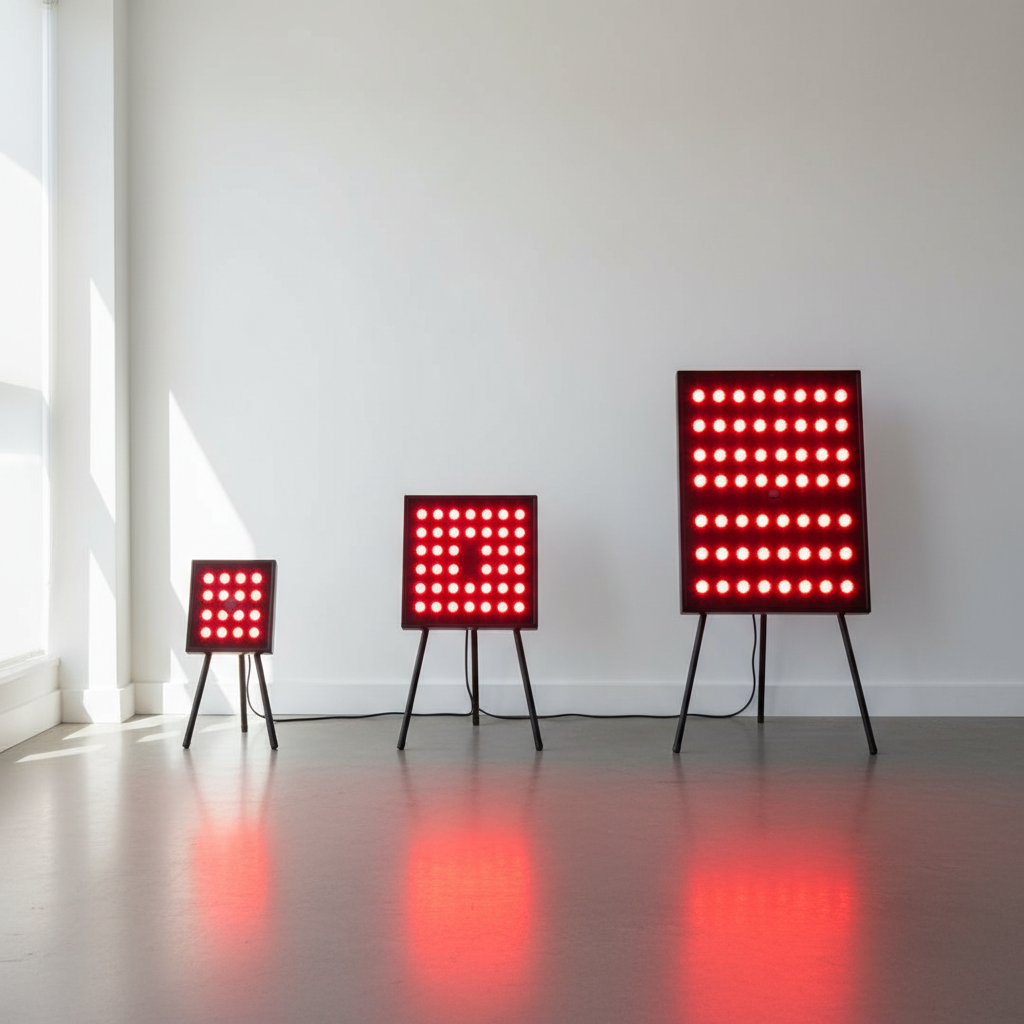
This review is research-based. Here is how we test and score devices.
Quick answer
Our best overall red light therapy panel is the PlatinumLED BioMax 900, for its multi-wavelength output, strong irradiance and FDA Class II registration. Paying more does not buy more: the Joovv Solo 3.0 at around $1,780 carries a large brand premium for comparable or lower specifications than its rivals. Whatever you choose, look for at least 660nm red light for skin and 850nm near-infrared for muscle and joints.
Red light therapy has evolved from a clinical curiosity into one of the most popular home wellness technologies. But with dozens of brands competing on specs, wavelengths, and price, choosing one can feel overwhelming. This roundup reviews the five best red light therapy panels for home use in 2026 — and shows you exactly what separates a great red light therapy panel from an overpriced one — with honest assessments of each brand’s strengths and limitations.
If you’re new to red light therapy, start with our complete explainer first — it covers the science of photobiomodulation, how red and near-infrared light interact with mitochondria, and the evidence base for different applications. This article assumes you understand the basics and are ready to choose a device.
In this review
What to look for in a red light therapy panel
Before diving into specific devices, here are the specifications that actually matter — and the ones that are mostly marketing.
Specifications that matter
Wavelengths: Look for 660 nm (red, best for skin and surface tissue) and 850 nm (near-infrared, penetrates deeper into muscle, joints, and organs). Bonus: 810 nm has strong evidence for transcranial and neurological applications. Multi-wavelength panels that also include 630 nm and 830 nm provide a broader therapeutic spectrum.
Irradiance (power density): Measured in mW/cm² at 6 inches. Minimum 80 mW/cm² for therapeutic doses in reasonable session times (10–20 minutes). Higher irradiance means shorter sessions or the ability to stand further from the panel.
Coverage area: Determines how much of your body is treated simultaneously. Full-body panels (36″+ height) save time vs. repositioning a smaller panel.
EMF at treatment distance: Should be below 2–3 milligauss (mG) at 6 inches. Most reputable brands have addressed this; it shouldn’t be a differentiator among top-tier panels.
Third-party testing: Independent lab verification of wavelengths and irradiance, not just manufacturer claims.
Specifications that are mostly marketing
“Medical grade” — nearly every panel uses the same class of LEDs from the same handful of manufacturers. This term has no standardized meaning in the consumer red light space.
LED count alone — more LEDs doesn’t automatically mean more power. Driver quality, lens design, and beam angle matter more than raw LED count.
Pulsing modes — while pulsed light has some research interest, the clinical evidence for pulsed vs. continuous in consumer LED panels is minimal. Don’t pay a premium for this feature alone.
Our 5 picks at a glance
| Device | Best for | Rating | Price* |
|---|---|---|---|
| PlatinumLED BioMax 900 | Best overall | 4.5/5 | ~$1,250 |
| Mito Red MitoPRO 1500+ | Best value | 4.4/5 | ~$1,100 |
| Joovv Solo 3.0 | Best premium | 3.8/5 | ~$1,780 |
| Hooga HG300 | Best budget | 4.0/5 | ~$130 |
| FlexBeam | Best portable | 3.9/5 | ~$600 |
*Prices are approximate as of early 2026 and may vary with sales, bundles, and shipping.
PlatinumLED BioMax 900 — Best overall
PlatinumLED has been manufacturing red light therapy panels longer than most competitors — they were in the market years before Joovv made the category mainstream. The BioMax 900 is their flagship full-body panel, and it earns our top spot for the combination of wavelength versatility, raw power output, build quality, and reasonable (relative to Joovv) pricing.
What sets it apart: The BioMax 900 delivers seven wavelengths as standard — 480, 630, 660, 810, 830, 850, and 1060 nm. The inclusion of 810 nm is particularly significant — this wavelength has the strongest research base for transcranial photobiomodulation (brain health applications) and isn’t offered by Joovv or Mito Red in their standard configurations. Independent third-party testing consistently shows the BioMax among the highest irradiance panels on the market, measuring roughly 90 mW/cm² at 6 inches in solo mode.
The details: 300 LEDs, touchscreen control, wireless syncing for modular setups, remote control included, FDA Class II medical device registration, 3-year warranty, 60-day satisfaction guarantee, free shipping within the U.S. The panel draws approximately 380W and ships from U.S. and EU warehouses.
Limitations: The floor stand is sold separately (~$150–$300), which effectively increases the total cost. The touchscreen interface, while functional, is less polished than Joovv’s app. The panel is heavy and not portable.
Best for: Specification-driven buyers who want maximum wavelength versatility, strong irradiance, and FDA registration without paying the Joovv premium. Particularly good for anyone interested in transcranial/neurological applications because of the 810 nm wavelength.
→ Read our full PlatinumLED BioMax 900 review
Mito Red MitoPRO 1500+ — Best value
Mito Red launched in 2019 and quickly became the go-to recommendation for cost-conscious red light therapy buyers. The MitoPRO 1500+ delivers 85–95% of Joovv’s performance at roughly 60% of the price — making it the rational choice for most home users.
What sets it apart: Four wavelengths as standard (630, 660, 830, and 850 nm) via their Enhanced Spectral Energy Output (ESPEO) technology. The 300 dual-chip 5W LEDs deliver strong irradiance (>170 mW/cm² claimed at surface contact), and the 36-inch panel height provides genuine full-body coverage in a single standing session. Independent reviewers consistently rank it as one of the highest output-per-dollar panels available.
The details: 300 LEDs, remote control, 3-year warranty, modular daisy-chaining support, over-door hook and hanging cables included, ~400W power draw, free U.S. shipping. The MitoPRO+ series added the 630 nm and 830 nm wavelengths that were missing from earlier Mito Red models.
Limitations: No app connectivity (you control it manually or with the included remote). Build quality is good but noticeably less premium than Joovv’s anodized aluminum housing. Does not include 810 nm (relevant if you’re interested in transcranial applications). The brand is newer and has less long-term track record than PlatinumLED or Joovv.
Best for: Anyone who wants strong therapeutic output for full-body sessions without overpaying for brand prestige. Athletes, biohackers, and wellness enthusiasts on a sensible budget. This is the panel we’d recommend to most first-time buyers.
→ Read our full Mito Red MitoPRO review
Joovv Solo 3.0 — Best premium experience
Joovv is the brand that made home red light therapy mainstream. The Solo 3.0 is their entry-level modular panel, and it’s undeniably the most polished consumer experience in the category. But in 2026, you’re paying a 3–5x brand premium for comparable or lower specifications — and that’s increasingly hard to justify on performance alone.
What sets it apart: Best-in-class industrial design with sleek anodized aluminum housing. Bluetooth app connectivity for session tracking, timer, and Recovery+ mode (10 Hz pulsing in NIR only). The most mature modular ecosystem — start with a Solo and expand to Duo, Max, Quad, or Elite configurations as your budget grows. Joovv has clinical research partnerships and arguably the strongest brand recognition in the space.
The details: 150 LEDs, 660 nm + 850 nm wavelengths, ~60W power draw (significantly lower than competitors), Bluetooth app, multiple mounting options (door, wall, floor stand), 2-year warranty, and Joovv’s clinical-grade certifications.
Limitations: Only two wavelengths in the base model (no 810 nm, no multi-wavelength). The lowest LED count and power output among the full-size panels in this roundup — the MitoPRO 1500 has double the LEDs at $600+ less. The 150-LED Solo is a half-body panel at best; full-body coverage requires spending $3,000+ on a larger configuration. Independent reviewers note that Joovv’s prices have increased despite the panel specifications not meaningfully changing.
Best for: Buyers who prioritize aesthetic design, app integration, and the Joovv brand ecosystem — and for whom the price premium is not a concern. Also suitable for users who want to start small and modularly expand over time. If you’re primarily evaluating performance per dollar, look at Mito Red or PlatinumLED instead.
→ Read our full Joovv Solo 3.0 review
Hooga HG300 — Best budget entry
If you’re curious about red light therapy but not ready to invest $1,000+, the Hooga HG300 is the best way to find out whether this modality works for you. At approximately $130, it removes the financial risk from your first experience — and the specifications are genuinely therapeutic, not toy-grade.
What sets it apart: Remarkably good value. The HG300 delivers 660 nm and 850 nm at therapeutic irradiance levels in a compact, targeted panel. Available on Amazon with Prime shipping, making it the most accessible entry point. Decent build quality for the price, with low EMF output.
The details: 60 LEDs, 660 nm + 850 nm wavelengths, tabletop or door-hook mounting, 3-year warranty, compact enough for travel. Best suited for targeted treatment of face, shoulders, knees, or other specific areas rather than full-body coverage.
Limitations: Small panel size means you’ll be repositioning frequently for anything beyond targeted treatment. Only two wavelengths. No app, no modular expansion. Build quality is functional but won’t win design awards. This is a starter device — once you’ve confirmed that red light therapy works for you, you’ll likely want to upgrade to a full-body panel.
Best for: First-time buyers who want to try red light therapy without a major investment. Great for facial treatments, spot treatment of injuries, or desktop use during work. Also excellent as a travel companion to supplement a larger home panel.
FlexBeam — Best portable
FlexBeam takes a fundamentally different approach from panel-style devices. It’s a wearable, rechargeable red light therapy device designed to wrap around specific body parts — knees, shoulders, elbows, neck, abdomen — and deliver targeted treatment while you go about your day.
What sets it apart: Truly portable and wearable. Battery-powered with a flexible wraparound design that conforms to different body parts. Two wavelength bands — red peaking around 625 nm and near-infrared around 810 nm. Pre-programmed treatment modes. Used by professional athletes and physiotherapy clinics. You can wear it while working, watching TV, or even during light activity.
The details: Rechargeable battery (4+ hours), flexible silicone body, 3 treatment programs, approximately 10-minute sessions, lightweight enough to wear comfortably, carrying case included.
Limitations: Very small treatment area — this is explicitly a spot-treatment device, not a full-body solution. High price for the coverage area (~$600 for a device that treats one joint at a time). Lower total irradiance than a panel at equivalent distance. Not a substitute for a full-body panel if you want systemic benefits.
Best for: Athletes and active individuals who need portable, targeted treatment for specific injuries or joints. Travelers who want red light therapy on the road. People with localized pain issues (knee, shoulder, elbow) who want hands-free treatment during daily activities.
Head-to-head comparison
| Feature | PlatinumLED | Mito Red | Joovv | Hooga |
|---|---|---|---|---|
| Price | ~$1,250 | ~$1,100 | ~$1,780 | ~$130 |
| LEDs | 300 | 300 | 150 | 60 |
| Wavelengths | 7 (incl. 810) | 4 | 2 | 2 |
| Power draw | ~380W | ~400W | ~60W | ~25W |
| Coverage | Full body | Full body | Half body | Targeted |
| App control | No (touchscreen) | No (remote) | Yes (Bluetooth) | No |
| Warranty | 3 years | 3 years | 2 years | 3 years |
| FDA status | Class II | Registered | Registered | Registered |
| Our rating | 4.5/5 | 4.4/5 | 3.8/5 | 4.0/5 |
The market reality in 2026: Joovv built the category and remains the most recognized name, but you are paying a significant brand premium for comparable or lower specifications. Mito Red and PlatinumLED have closed the quality gap while maintaining substantially lower prices. For most home users, the clinical difference in outcomes between these three brands is negligible — the differences are in design polish, app ecosystem, and wavelength variety.
Our recommendations by use case
If you want the best all-around panel: PlatinumLED BioMax 900. Most wavelengths, strong irradiance, FDA Class II, 3-year warranty, competitive pricing.
If you want the best value for full-body treatment: Mito Red MitoPRO 1500+. Highest output per dollar, 4 wavelengths, full-body coverage, 3-year warranty.
If design and app ecosystem matter most: Joovv Solo 3.0. The most polished consumer experience, modular expansion path, Bluetooth app — but be prepared to pay significantly more for comparable output.
If you’re testing the waters on a budget: Hooga HG300. At ~$130, you get therapeutic wavelengths and sufficient irradiance to determine whether red light therapy works for you before committing to a larger investment.
If you need portability and targeted treatment: FlexBeam. The only wearable option in this roundup, ideal for athletes, travelers, and specific joint/injury treatment.
No matter which device you choose, consistency matters more than brand. A $130 Hooga panel used daily for 6 months will produce better results than a $1,800 Joovv used twice and forgotten in a closet. Start with what fits your budget and commit to regular use — you can always upgrade later.
Frequently Asked Questions
What is the best red light therapy panel?
In this roundup the PlatinumLED BioMax 900 earns our highest rating as the best overall panel, thanks to its multi-wavelength output, strong irradiance, and FDA Class II registration. If you want the best value for full-body treatment, the Mito Red MitoPRO 1500+ delivers nearly the same performance for less. The right choice ultimately depends on your budget and whether you need full-body coverage, premium app features, or portability.
Are expensive red light therapy panels worth it?
Not necessarily. The most expensive panel here, the Joovv Solo 3.0 (around $1,780), carries a significant brand premium for comparable or even lower specifications than rivals, while Mito Red and PlatinumLED have closed the quality gap at substantially lower prices. For most home users the clinical difference in outcomes between the top brands is negligible. Consistency of use matters more than brand — a $130 panel used daily can outperform an $1,800 panel used twice and forgotten in a closet.
What wavelengths should a red light therapy panel have?
At minimum, look for 660 nm (red, best for skin and surface tissue) and 850 nm (near-infrared, which penetrates deeper into muscle, joints, and organs). The 810 nm wavelength has a strong research base for transcranial and neurological applications, so it is a meaningful bonus if that interests you. Multi-wavelength panels that also include 630 nm and 830 nm provide a broader therapeutic spectrum.
Related reading on Frequency Tech
- What Is Red Light Therapy? Complete Science Guide
- 5 Types of Frequency Technology Explained
- Healy Review: Honest Independent Assessment
- NuCalm Review: Neuroscience Relaxation Technology
- Best Frequency Wellness Devices of 2026
- Red Light Therapy at Home vs Clinic: Which Is Right?
- Are Frequency Devices Safe? Complete Safety Guide
Disclaimer: This review roundup is an independent editorial assessment. Frequency Tech may receive affiliate commissions from some links in this article at no additional cost to you — see our Affiliate Disclosure for details. Red light therapy devices are general wellness products; they are not intended to diagnose, treat, cure, or prevent any disease. Specifications and prices are subject to change by manufacturers. Individual results vary based on consistency of use, treatment distance, session duration, and individual biology. Always consult a healthcare professional before beginning any new wellness practice.