
What Is Red Light Therapy? A Guide to Photobiomodulation
Quick answer
Red light therapy (photobiomodulation) uses red light around 660nm and near-infrared light around 850nm to stimulate cellular energy production through cytochrome c oxidase in the mitochondria. A 2025 expert consensus of 21 specialists confirmed it is safe for adults and does not damage DNA. Skin rejuvenation and wound support have the strongest evidence, muscle recovery and joint comfort have moderate and growing evidence, and a dual-wavelength panel used for 10 to 20 minutes a day is the most versatile way to start.
Red light therapy is having a moment. Walk into any biohacking lab, high-end spa, or professional sports facility and you’ll likely see glowing red panels mounted on walls. Athletes, dermatologists, and wellness enthusiasts are investing in devices that deliver specific wavelengths of red and near-infrared light, and the research behind it is growing faster than any other category in frequency wellness.
But red light therapy is also surrounded by exaggerated claims, confusing terminology, and devices that vary wildly in quality. This guide cuts through the noise: what photobiomodulation actually is, how it works at the cellular level, what the evidence supports, and how to choose a device if you decide to try it.
Table of Contents
- What Is Red Light Therapy?
- How Photobiomodulation Works at the Cellular Level
- The Wavelengths That Matter: 660nm vs. 850nm
- A Brief History
- What the Research Says
- Types of Red Light Devices
- How to Use Red Light Therapy
- How to Choose a Red Light Device
- Safety and Contraindications
- Red Light vs. Other Frequency Technologies
- Key Takeaways
- Frequently Asked Questions
What Is Red Light Therapy?
Red light therapy — scientifically known as photobiomodulation (PBM) — is a technology that uses specific wavelengths of red and near-infrared light to stimulate cellular processes in the body. Unlike a heat lamp or infrared sauna, red light therapy works through photochemical interactions at the cellular level, not through heat. The light energy is absorbed by structures within your cells, triggering a cascade of biological responses.
The term “photobiomodulation” literally means “modulating biology with light” — photo (light) + bio (biology) + modulation (change or adjustment). It’s the currently accepted scientific term, replacing older names like “low-level light therapy” (LLLT) and “low-level laser therapy,” which were considered too ambiguous.
What makes red light therapy distinct from other frequency technologies is that it operates at much higher frequencies on the electromagnetic spectrum. While PEMF and microcurrent devices work with electrical and magnetic fields in the Hz to MHz range, red light operates in the terahertz range — visible and near-infrared light. The fundamental principle is the same (delivering specific frequencies to influence biological function), but the mechanism and applications are different.
Red light therapy has gained particular traction because the evidence base is substantial and growing rapidly. A 2025 evidence-based clinical consensus by 21 international experts confirmed that PBM is a safe modality for adult patients and that red light PBM does not induce DNA damage — an important safety validation.
How Photobiomodulation Works at the Cellular Level
The mechanism behind red light therapy is one of the best-understood in frequency wellness.
When red or near-infrared light penetrates the skin and reaches your cells, it’s absorbed by a specific molecule inside the mitochondria called cytochrome c oxidase (also known as Complex IV of the mitochondrial electron transport chain). Cytochrome c oxidase acts as a photoreceptor — it absorbs photons of light at specific wavelengths.
Under normal conditions, nitric oxide (NO) can bind to cytochrome c oxidase and inhibit its function, essentially slowing down the mitochondrial energy production process. When red or near-infrared light is absorbed, it displaces the nitric oxide from cytochrome c oxidase, freeing the enzyme to function at full capacity. This triggers several downstream effects.
Increased ATP production — with cytochrome c oxidase unblocked, the mitochondrial electron transport chain operates more efficiently, producing more ATP (the cell’s primary energy molecule). More cellular energy means the cell can perform its functions — repair, communication, defense — more effectively.
Release of nitric oxide — the displaced nitric oxide enters the surrounding tissue, where it acts as a vasodilator, improving local blood flow and circulation.
Modulation of reactive oxygen species (ROS) — PBM produces a brief, controlled increase in ROS that activates beneficial cellular signaling pathways, including those related to anti-inflammatory responses and antioxidant defense. This is a “hormetic” effect — a small stress that triggers a larger beneficial adaptation.
Activation of transcription factors — the cellular changes activate transcription factors (including NF-kB and AP-1) that influence gene expression related to cell survival, proliferation, and tissue repair.
A 2025 comprehensive review confirmed these mechanisms and further documented PBM’s effects on immune cell populations, including promoting anti-inflammatory macrophage states and modulating T-cell and dendritic cell function.
The Wavelengths That Matter: 660nm vs. 850nm
Not all red light is therapeutic. The wavelengths that produce photobiomodulation effects fall within a specific range sometimes called the “optical window” — roughly 600 to 1,000 nanometers. Within this window, two wavelengths have received the most research attention.
660nm — Red light (visible)
Red light at 660nm is visible to the human eye (it’s the characteristic red glow you see from a panel). It penetrates approximately 8–10mm into tissue, reaching the skin’s surface layers, superficial blood vessels, and connective tissue. Research has focused on skin rejuvenation, wound support, collagen production, inflammation in superficial tissue, and hair follicle stimulation.
850nm — Near-infrared light (invisible)
Near-infrared light at 850nm is invisible to the human eye — you can’t see it, but your cells absorb it. It penetrates deeper than red light, reaching approximately 30–40mm into tissue, accessing muscles, joints, tendons, and deeper structures. Research has focused on muscle recovery, joint comfort, deep tissue inflammation, bone support, and neurological applications.
Why quality devices offer both
Most serious red light therapy devices deliver both 660nm and 850nm simultaneously. This dual-wavelength approach addresses both surface and deep tissue in a single session. Some devices allow you to switch between red-only, NIR-only, or combined modes depending on your goal.
The specific wavelength matters because cytochrome c oxidase has peak absorption at certain wavelengths. Research suggests that 660nm and 850nm represent the two primary absorption peaks within the optical window, which is why they’re the most commonly used in clinical research and quality consumer devices.
→ Related reading: 5 Types of Frequency Technology Explained
A Brief History
The story of photobiomodulation begins with an accidental discovery. In 1967, Hungarian physician Endre Mester was researching whether laser light could cause cancer in mice. Instead, he discovered that low-power laser light accelerated hair regrowth and wound recovery in the treated animals. He had discovered photobiomodulation — though the term wouldn’t be coined for decades.
Through the 1970s and 1980s, research expanded primarily in Europe and the former Soviet Union, focusing on wound recovery, pain management, and tissue repair. Low-level lasers were the primary delivery devices during this era.
The 2000s brought two important shifts. First, LED (Light Emitting Diode) technology became affordable enough for consumer devices, eliminating the need for expensive lasers. LEDs could deliver the same wavelengths at lower cost, wider coverage areas, and with simpler safety profiles. Second, NASA research on LED light for plant growth in space led to studies on its effects on human cells, finding that specific wavelengths promoted wound recovery and cell regeneration.
The 2010s saw the emergence of the consumer red light therapy market, with brands like Joovv, Mito Red Light, and PlatinumLED making full-body panels accessible to home users. The market has grown dramatically since, driven by social media, biohacking culture, and a steadily growing evidence base.
What the Research Says
Red light therapy has one of the fastest-growing evidence bases of any wellness technology. Here’s what the research supports, organized by strength of evidence.
Strong evidence
Safety: A 2025 expert consensus by 21 international specialists confirmed PBM is safe for adult patients and does not induce DNA damage. This is the strongest safety validation to date for any consumer frequency technology.
Skin rejuvenation: A controlled trial of 136 volunteers found that both red light and polychromatic light significantly improved skin complexion, skin feeling, and intradermal collagen density. Increases in intradermal collagen density were measured by ultrasound in this trial, and other controlled studies have reported gains in collagen and skin elasticity.
Wound support: PBM’s role in wound recovery is well-established, with research dating back to Mester’s original discovery. Multiple reviews have confirmed that PBM optimizes the inflammatory phase of wound recovery, promotes balanced immune response, and supports tissue regeneration.
Moderate evidence
Muscle recovery: A 2025 comprehensive review documented PBM’s role in skeletal muscle regeneration, highlighting effects on satellite cell activation, ATP production, and angiogenesis. Studies have found 13–23% improvements in muscle performance and significantly accelerated recovery times when PBM is applied before or after exercise.
Joint comfort: Research on PBM for osteoarthritis and joint comfort has shown positive results, with a systematic review finding effectiveness in reducing discomfort and disability in knee osteoarthritis. The deep-penetrating 850nm wavelength is particularly relevant for joint applications, which we cover in depth in our guide to red light therapy for pain relief.
Inflammation management: A 2025 comprehensive review of PBM’s immunomodulatory effects documented its ability to promote anti-inflammatory macrophage states, modulate cytokine production, and influence T-cell populations — providing a cellular mechanism for its anti-inflammatory effects.
Emerging evidence
Cognitive function: Transcranial PBM (applying near-infrared light to the head) has shown preliminary positive results for cognitive function, with early studies exploring applications for age-related cognitive changes and recovery from brain injuries. This is an active and growing area of research.
Hair regrowth: Several clinical trials have examined PBM for hair loss, with a randomized, double-blind study finding efficacy for androgenic alopecia. FDA-cleared laser caps and helmets are available for this specific application.
Mood and sleep: Early research suggests PBM may support mood through its effects on mitochondrial function in brain cells, and may influence circadian rhythms when used at specific times of day. Evidence is preliminary but intriguing.
→ Deep dive: The Science Behind Frequency Technology
Types of Red Light Devices
Consumer red light devices come in several form factors, each suited to different goals and budgets.
Full-body panels
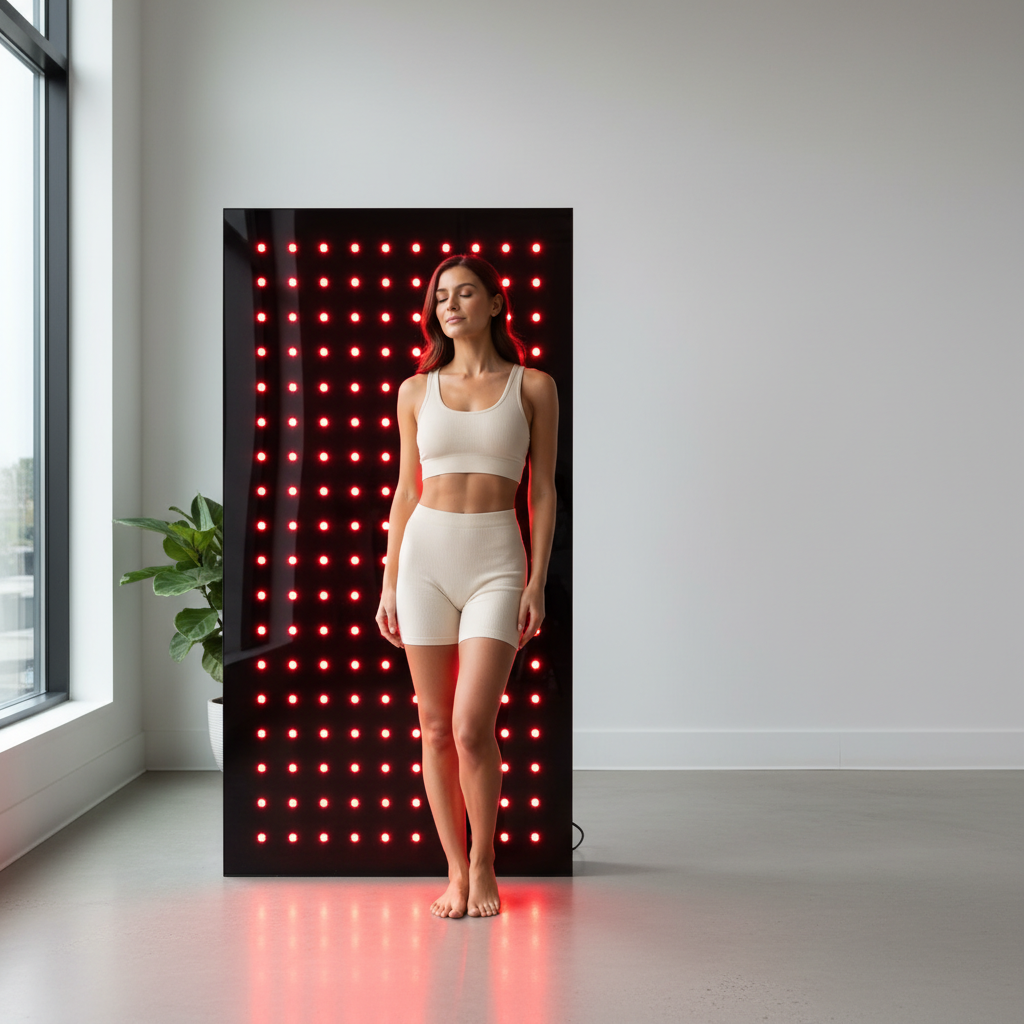
Large LED panels (typically 36–45 inches tall) that deliver red and near-infrared light across a wide area. You stand or sit in front of the panel at a distance of 6–12 inches. Sessions last 10–20 minutes. These offer the most comprehensive coverage and are the format most commonly used in clinical research. Price range: $600–$3,000+.
Tabletop / half-body panels
Smaller panels designed for targeted use — face, torso, or specific body areas. Good for users with limited space or specific goals like facial skin health. Price range: $200–$800.
Handheld wands and devices
Compact, portable devices designed for targeted application on specific areas (face, joints, muscles). Lower power output than panels, requiring longer sessions for equivalent dose. Popular for travel and spot treatment. Price range: $50–$300.
Face masks
LED masks that conform to the face, delivering red light specifically for facial skin health. Convenient but limited to facial applications. Some include multiple wavelength options (red, NIR, blue for acne). Price range: $100–$500.
Laser caps and helmets
Specialized devices designed for scalp application, primarily marketed for hair regrowth. Some have received FDA clearance for this specific use. Price range: $500–$2,000.
How to Use Red Light Therapy
Red light therapy is one of the simplest frequency technologies to use — no apps, no electrodes, no software. Here’s how to get started.
Basic protocol
Position yourself 6–12 inches from the panel (closer for higher dose, farther for lower dose and wider coverage). Expose bare skin to the light — clothing blocks the wavelengths. Start with 10 minutes per area per session. Use 3–5 times per week, or daily if desired. Consistency matters more than session length.
Timing considerations
Many users prefer morning sessions, as red and NIR light exposure in the morning may support circadian rhythm function. Avoid using red light panels close to bedtime, as the brightness (even from the visible red wavelengths) could interfere with sleep onset for some people — though the NIR wavelengths themselves shouldn’t affect melatonin production.
For athletic recovery, applying PBM before exercise (pre-conditioning) has shown benefits in some studies, and post-exercise application supports recovery. Some athletes use both.
What to expect
During a session, you’ll see a bright red glow (from the 660nm LEDs) and feel gentle warmth — this is from the LEDs themselves, not from therapeutic heating. The near-infrared LEDs (850nm) are invisible, so panels appear to have some LEDs that aren’t lit — they are working, you just can’t see them.
Most people notice skin improvements (smoother texture, more even tone) within 4–8 weeks of consistent use. Muscle recovery and joint comfort improvements are often reported within 2–4 weeks. Some effects (like reduced post-exercise soreness) can be noticeable after individual sessions.
How to Choose a Red Light Device
The red light market is crowded with options, and quality varies significantly. Here’s what to look for.
Wavelength
Look for devices that deliver both 660nm (red) and 850nm (near-infrared). These are the two most researched wavelengths. Devices offering only one wavelength are less versatile.
Irradiance
Irradiance measures light power per unit area (mW/cm²). Higher irradiance means more therapeutic light reaches your tissue per unit of time, allowing shorter sessions. Quality panels deliver 100+ mW/cm² at the treatment surface. Budget devices may deliver 30–50 mW/cm², requiring longer sessions for equivalent dose.
Treatment area
Match the device size to your goal. For facial skin health, a tabletop panel or mask is sufficient. For full-body benefits (muscle recovery, general wellness), you’ll want a larger panel or multiple panels.
Third-party testing
Reputable manufacturers publish independent testing data showing actual irradiance measurements, wavelength accuracy, and EMF emissions. If a company can’t provide these numbers, be cautious.
Top picks
Mito Red Light MitoPRO Series (~$600–$1,200) — Excellent irradiance, dual wavelength, multiple panel sizes. Our top overall pick for most users.
Joovv (~$800–$2,500) — The most recognized consumer brand. Premium build quality, modular design, and a companion app for tracking sessions. Higher price reflects brand positioning.
PlatinumLED (~$600–$1,500) — Known for high irradiance output. Popular among biohackers seeking maximum power per dollar.
Solawave (~$100–$200) — Entry-level handheld wand focused on facial applications. Good for testing whether red light therapy resonates with you before investing in a panel.
→ Our picks: Best Frequency Wellness Devices of 2026
→ Decision guide: How to Choose a Frequency Device
Safety and Contraindications
Red light therapy has one of the strongest safety profiles of any frequency technology. The 2025 expert consensus panel confirmed that PBM is safe for adult patients and does not induce DNA damage — a concern that had been raised by critics given that the technology stimulates cellular activity.
Red and near-infrared light are non-ionizing, non-thermal (at therapeutic doses), and non-invasive. Unlike UV light, which can damage DNA and increase cancer risk, the wavelengths used in PBM (600–1,000nm) do not carry enough energy to break chemical bonds or damage genetic material.
Contraindications and precautions
Eye protection: Do not look directly into LED panels — while red and NIR light aren’t inherently dangerous to eyes at therapeutic doses, the brightness of a high-irradiance panel can cause discomfort and potentially retinal stress. Most manufacturers include protective eyewear — see our red light therapy safety guide for eye protection and dosing details.
Photosensitive medications: If you take medications that increase light sensitivity (certain antibiotics, retinoids, anti-inflammatory drugs), consult your doctor before using PBM.
Active cancer: While the safety evidence is reassuring for healthy adults, anyone with active cancer should consult their oncologist. PBM stimulates cellular activity, and the interaction with cancerous cells requires medical guidance.
Pregnancy: Insufficient data exists to confirm safety during pregnancy. Most manufacturers advise against use, particularly over the abdomen.
Tattoos: Dark tattoo ink absorbs more light energy, potentially causing localized heating. Start with shorter sessions and lower intensity if treating tattooed areas.
Red Light vs. Other Frequency Technologies
| Factor | Red Light / PBM | PEMF | Microcurrent (Healy) |
|---|---|---|---|
| Mechanism | Light → cytochrome c oxidase → ATP | EM pulses → adenosine receptors → ATP | Electrical current → proton gradient → ATP |
| Best for | Skin, muscle recovery, joints, anti-aging | Bone recovery, comfort, circulation | Portable wellness, relaxation |
| Evidence | Strong and growing rapidly | Strong (FDA approved 1979) | Moderate (FDA cleared for pain) |
| Ease of use | Very simple — stand in front of panel | Simple — lie on mat | Moderate — app-guided |
| Session time | 10–20 minutes | 8–30 minutes | 20–60 minutes |
| Entry price | ~$100 (wand) / ~$600 (panel) | ~$500 | ~$506 |
An interesting commonality: all three technologies ultimately increase cellular ATP production, just through different mechanisms — light photons (PBM), electromagnetic pulses (PEMF), and electrical current (microcurrent). This convergence on ATP suggests that supporting cellular energy production may be a fundamental principle across frequency technologies.
→ Full comparison: 5 Types of Frequency Technology Explained
Key Takeaways
- Red light therapy (photobiomodulation) uses specific wavelengths of red (660nm) and near-infrared (850nm) light to stimulate cellular processes through interaction with cytochrome c oxidase in mitochondria.
- A 2025 expert consensus of 21 international specialists confirmed PBM is safe for adults and does not induce DNA damage — the strongest safety validation for any consumer frequency technology.
- Skin rejuvenation and wound support have the strongest evidence, with controlled trials showing significant improvements in collagen density and skin quality.
- Muscle recovery and joint comfort have moderate and growing evidence, with studies showing 13–23% performance improvements and accelerated recovery.
- PBM is the simplest frequency technology to use — stand in front of a panel for 10–20 minutes, no apps or electrodes needed.
- Dual-wavelength devices (660nm + 850nm) provide the most versatile treatment, addressing both surface and deep tissue.
- Red light therapy is the fastest-growing category in frequency wellness research, with new studies published monthly across dozens of applications.
Frequently Asked Questions
Is red light therapy the same as infrared saunas?
No. Infrared saunas use far-infrared wavelengths (3,000–10,000nm+) to heat the body — the therapeutic effect comes primarily from heat. Red light therapy uses red and near-infrared light (600–1,000nm) at non-thermal doses — the therapeutic effect comes from photochemical interactions with cells, not heat. They’re complementary but mechanistically different.
How long before I see results from red light therapy?
Skin improvements (smoother texture, more even tone) typically become noticeable within 4–8 weeks of consistent use (3–5 sessions per week). Muscle recovery benefits may be noticeable within individual sessions or after 2–4 weeks of regular use. Joint comfort improvements often take 4–8 weeks. Consistency is the key variable.
Can I overdo red light therapy?
While PBM is very safe, there is a “biphasic dose response” — too little light produces minimal effect, optimal doses produce maximum benefit, and excessive doses can actually reduce effectiveness (the “Arndt-Schulz” curve described by Huang and Hamblin, 2011). This is why following manufacturer guidelines for session duration and distance matters. More is not always better.
Do I need to remove clothing for red light therapy?
Yes — clothing blocks the therapeutic wavelengths. The target area should have bare skin exposed to the light. This is why full-body panels are typically used in private settings.
Is red light therapy FDA approved?
Specific red light devices have received FDA clearance for specific applications — including certain laser caps for hair regrowth and LED devices for pain management. The broader category of photobiomodulation has not received blanket FDA approval for all claimed applications. The 2025 expert consensus supports PBM’s safety and efficacy across multiple applications based on the available evidence.
Can I use red light therapy with other frequency devices?
Yes. Red light works through a different mechanism (photochemical) than PEMF (electromagnetic) or microcurrent (electrical), so they don’t interfere with each other. Many wellness enthusiasts combine a red light panel with a PEMF mat or microcurrent device for a multi-modal approach. Some devices, like certain HealthyLine mats, already combine PEMF with far-infrared light in a single product.
Does red light therapy really work?
The evidence base is substantial and growing. Skin rejuvenation and wound support have the strongest evidence, with controlled trials showing improvements in collagen density and skin quality, while muscle recovery and joint comfort have moderate and growing evidence. Cognitive function, hair regrowth, and mood and sleep are emerging or preliminary areas. Results depend on consistent use and a quality, properly dosed device.
Is red light therapy safe?
Red light therapy has one of the strongest safety profiles of any frequency technology. The wavelengths used (roughly 600–1,000nm) are non-ionizing and non-thermal at therapeutic doses, and serious adverse events are rare. Sensible precautions still apply: avoid looking directly into panels and use the protective eyewear most manufacturers include, check with your doctor if you take photosensitive medications, and consult a professional if you have active cancer or are pregnant.
References
- Maghfour, J. et al. (2025). “Evidence-based consensus on the clinical application of photobiomodulation.” Journal of the American Academy of Dermatology. Read the consensus →
- Al Balah, O. F. et al. (2025). “Immunomodulatory effects of photobiomodulation: a comprehensive review.” Lasers in Medical Science. Read the full review →
- Hernández-Bule, M. L. et al. (2024). “Unlocking the Power of Light on the Skin: A Comprehensive Review on Photobiomodulation.” International Journal of Molecular Sciences, 25(8), 4483. Read the full review →
- Wunsch, A. & Matuschka, K. (2014). “A Controlled Trial to Determine the Efficacy of Red and Near-Infrared Light Treatment in Patient Satisfaction, Reduction of Fine Lines, Wrinkles, Skin Roughness, and Intradermal Collagen Density Increase.” Photomedicine and Laser Surgery, 32(2). Read the full study →
- Son, Y. et al. (2025). “Effects of photobiomodulation on multiple health outcomes: an umbrella review of randomized clinical trials.” Systematic Reviews. Read the umbrella review →
Continue Reading on Frequency Tech
- Frequency Technology Explained: A Beginner’s Guide (2026)
- 5 Types of Frequency Technology Explained
- The Science Behind Frequency Technology
- What Is PEMF? A Complete Guide
- What Is Microcurrent?
- Best Frequency Wellness Devices of 2026
- How to Choose a Frequency Device
- Frequency Technology Glossary
Disclaimer: The information on Frequency Tech is for educational and informational purposes only. Red light therapy devices are not intended to diagnose, treat, cure, or prevent any disease. The content on this site does not constitute medical advice. Always consult a qualified healthcare professional before beginning any new wellness practice, especially if you have existing medical conditions, take photosensitive medications, or are pregnant. Some links on this site may be affiliate links — see our full disclosure policy for details.
The complete red light therapy learning path
Dig into devices and evidence: