
5 Types of Frequency Technology Explained (2026)
Quick answer
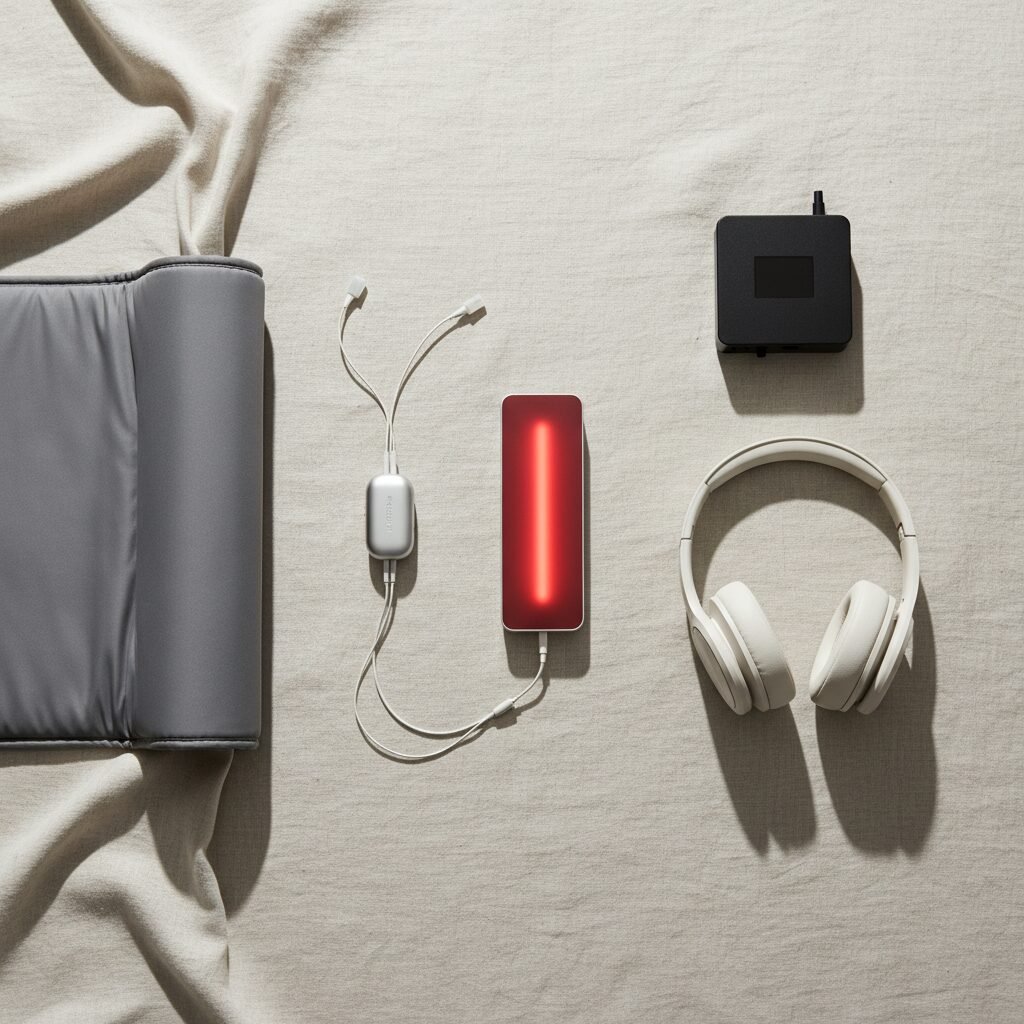
Frequency technology comes in four established forms: PEMF (pulsed electromagnetic fields), microcurrent (sub-sensory electrical current), photobiomodulation (red and near-infrared light) and sound-based approaches such as binaural beats. PEMF has the strongest evidence, with FDA clearance for bone recovery since 1979; red light is the fastest-growing research area; binaural beats are the cheapest way to try frequency wellness. Pick by your goal and budget, not by which brand makes the boldest claim.
Not all frequency devices are created equal. The term “frequency technology” covers a surprisingly broad range — from FDA-cleared devices used in clinics worldwide to experimental tools you run from your phone. The difference between them matters, because the type of technology you choose determines how it works, what it costs, and how much research supports it.
This guide breaks down the four main types of frequency technology on the market today. For each one, you’ll learn how it works, which devices use it, what the evidence says, and who it’s best suited for — so you can make an informed decision before spending a dollar.
Table of Contents
- 1. Microcurrent and Individualized Microcurrent Frequency (IMF)
- 2. Pulsed Electromagnetic Field (PEMF) Technology
- 3. Sound and Vibrational Frequency Technology
- 4. Light-Based Frequency Technology (Photobiomodulation)
- Comparison Table: All 4 Types at a Glance
- How to Choose the Right Type for You
- Key Takeaways
- Frequently Asked Questions
1. Microcurrent and Individualized Microcurrent Frequency (IMF)
How it works
Microcurrent devices deliver extremely low-level electrical currents to the body — typically less than one milliamp, which is below the threshold most people can even feel. These currents are delivered through small electrode pads placed on the skin, clipped to the earlobes, or worn on the wrists.
The underlying concept is that the body’s cells operate on tiny electrical signals, and by introducing specific low-level currents, you can support cellular energy production (specifically ATP synthesis) and encourage the body’s own recovery and balancing processes. This approach has roots in decades of microcurrent research, though consumer-grade devices have only become widely available in the last several years.
Individualized Microcurrent Frequency (IMF) is a specific approach popularized by the Healy device. IMF programs use an app-driven system to select and deliver customized frequency patterns based on what the user wants to address — whether that’s comfort, relaxation, sleep support, or general wellness.
Key devices
Healy is the most recognized name in this category. It’s a small, portable device that connects to a smartphone app via Bluetooth and offers hundreds of frequency programs across multiple editions, ranging from the entry-level Healy Gold to the Healy Professional. The FDA has cleared Healy as a Class II medical device specifically for the temporary relief of acute, chronic, and arthritis-related pain. Its broader wellness programs — covering areas like emotional balance, sleep, and energy — go beyond what the FDA has evaluated.
Other notable microcurrent devices include NuCalm, which focuses on relaxation and stress management using microcurrent stimulation combined with neuroacoustic software, and various Frequency-Specific Microcurrent (FSM) machines, which are typically used by licensed practitioners in clinical settings.
Evidence level
Microcurrent technology sits in a middle ground. FDA clearance for pain management gives it a degree of regulatory credibility. Published research supports microcurrent’s role in wound recovery and tissue support. However, the wider wellness claims common in consumer marketing — emotional rebalancing, chakra harmonization, mental clarity programs — remain without peer-reviewed validation.
Best for
People who want a portable, app-driven wellness tool and are primarily interested in comfort support, relaxation, and general wellbeing. Best suited for those who already maintain a wellness routine (yoga, meditation, breathwork) and want to add a complementary technology.
→ Related reading: Healy Device Review 2026: An Honest, In-Depth Assessment
2. Pulsed Electromagnetic Field (PEMF) Technology
How it works
PEMF devices generate low-frequency electromagnetic pulses that pass through the body’s tissues. Unlike microcurrent, which requires direct skin contact through electrodes, PEMF systems deliver their frequencies through mats, pads, coils, or rings that you sit, lie, or place near your body. The electromagnetic pulses penetrate deeply into tissue without needing any physical connection to the skin.
The principle is that pulsing electromagnetic fields can stimulate cellular activity at a foundational level — supporting circulation, promoting the body’s natural inflammatory response management, and encouraging cellular recovery. PEMF operates on the idea that every cell in the body has an electrical charge, and that optimizing this charge supports overall function.
Key devices
BEMER Pro is one of the most recognized premium PEMF systems, widely used in clinical and professional settings. It uses a patented pulsed electromagnetic signal focused specifically on microcirculation support. Prices start around $4,000 for a full system.
iMRS 2000 (now Omnium1) is another established PEMF system that has been on the market for over two decades, offering full-body mat applications along with localized pad accessories.
HealthyLine offers a range of PEMF mats that combine pulsed electromagnetic fields with far infrared heat and crystal elements, at more accessible price points starting around $500.
For those on a tighter budget, entry-level PEMF devices from brands like FlexPulse and EarthPulse offer portable, targeted PEMF at price points under $500.
Evidence level
PEMF has the strongest scientific foundation of any consumer frequency technology. The FDA approved PEMF devices for bone recovery in non-union fractures in 1979, making it one of the earliest electromagnetic wellness technologies to gain regulatory backing. Since then, a substantial body of peer-reviewed research has accumulated.
A comprehensive review published in JAAOS Global Research & Reviews confirmed reported success rates of 73% to 85% for non-union fractures using PEMF, with considerable level 1 evidence supporting its effectiveness. Research has also explored PEMF’s potential role in supporting comfort, reducing inflammation, improving sleep quality, and supporting mood — though these applications have less robust evidence than the bone recovery data.
Best for
People looking for the most research-backed frequency technology, particularly those interested in comfort support, recovery after physical activity, circulation, and sleep quality. PEMF mats are especially popular among athletes, biohackers, and people managing ongoing physical discomfort.
→ Related reading: Best Frequency Wellness Devices of 2026: A Buyer’s Guide
3. Sound and Vibrational Frequency Technology
How it works
Sound-based frequency technology uses audible sound waves — rather than electromagnetic fields or electrical currents — to influence the body and mind. The core principle is that specific sound frequencies can entrain brainwave patterns, promote relaxation, and support emotional wellbeing.
The most studied form is binaural beats. When two slightly different tones are played simultaneously — one in each ear through headphones — the brain perceives a third tone at the difference between them. For example, a 200 Hz tone in the left ear and a 210 Hz tone in the right creates a perceived 10 Hz binaural beat, which corresponds to the alpha brainwave range associated with relaxation. By adjusting the frequency difference, binaural beats can target different brainwave states: delta (1–4 Hz) for deep sleep, theta (4–8 Hz) for meditation, alpha (8–14 Hz) for relaxation, and beta (14–30 Hz) for focus and alertness.
Beyond binaural beats, this category includes Solfeggio frequencies — a set of ancient musical tones (396 Hz, 528 Hz, 639 Hz, etc.) that proponents associate with various emotional and spiritual benefits — as well as physical instruments like tuning forks, singing bowls, and crystal bowls, which produce resonant tones used in sound bath sessions and individual wellness practices.
Key tools and devices
Brain.fm offers AI-generated music specifically designed to influence focus, relaxation, and sleep through embedded auditory patterns including binaural beats.
Insight Timer is one of the largest meditation apps, with a library that includes binaural beats tracks and guided sound sessions.
Free Solfeggio frequency tracks are widely available on YouTube and streaming platforms, making this the most accessible entry point into frequency wellness.
For physical sound tools, BioSonics is a well-known brand of precision-tuned tuning forks designed for body placement, while SilverSky and Crystal Tones offer high-quality singing and crystal bowls.
Evidence level
Sound-based frequency technology has a moderate and growing evidence base, particularly for binaural beats. A 2024 systematic review published in Applied Sciences examined 12 studies on binaural beats for anxiety and depression, finding that binaural beats showed better results in alleviating symptoms compared to control conditions such as no music or noise-canceling headphones alone.
A separate 2023 meta-analysis and systematic review published in Psychological Research found encouraging but mixed results for binaural beats’ effects on memory and attention, indicating that more research with consistent parameters is needed.
Solfeggio frequencies and singing bowls have less formal research backing, though individual studies and a growing body of qualitative evidence suggest benefits for relaxation and stress reduction.
Best for
Beginners and budget-conscious explorers who want to experience frequency wellness with zero investment. Also ideal for people who already practice meditation or mindfulness and want to enhance their sessions. Sound-based approaches carry virtually no physical risk and require nothing more than a pair of headphones.
→ Related reading: Frequency Technology Explained: A Beginner’s Guide
4. Light-Based Frequency Technology (Photobiomodulation)
How it works
Photobiomodulation (PBM) — also known as low-level light technology or red light technology — uses specific wavelengths of red and near-infrared light to stimulate cellular processes. The key mechanism involves light photons being absorbed by cytochrome c oxidase, a photoreceptor within the mitochondria (the cell’s energy-producing structures). This absorption triggers a cascade of cellular responses including increased ATP production, reduced oxidative stress, and improved cellular signaling.
The wavelengths most commonly used in photobiomodulation fall between 600 and 1,000 nanometers — the red and near-infrared portion of the light spectrum. While these are technically much higher frequencies than the other technologies in this guide (operating in the terahertz range), the fundamental principle is the same: delivering specific frequencies to influence biological function.
PBM is non-thermal, meaning it doesn’t heat tissue the way a laser or infrared sauna does. Instead, it works through direct photochemical interactions at the cellular level.
Key devices
Joovv is one of the most recognized consumer red light brands, offering full-body panels, targeted devices, and portable units. Their panels deliver both red (660 nm) and near-infrared (850 nm) wavelengths.
Mito Red Light offers a range of panels at various price points, from desktop units to full-body setups, and has built a strong reputation in the biohacking community.
PlatinumLED produces high-irradiance panels that are popular among users looking for maximum output per session.
For entry-level exploration, handheld red light wands and face masks from brands like Solawave and CurrentBody offer affordable introductions to the technology, typically focused on skin wellness.
Evidence level
Photobiomodulation has a substantial and rapidly growing research base. A 2025 comprehensive review published in Lasers in Medical Science analyzed its immunomodulatory effects and found evidence supporting PBM’s ability to influence cellular processes including inflammation management and tissue support. An evidence-based clinical consensus published in 2025 by a panel of 21 international experts concluded that PBM is a safe modality for adult use and that red light PBM does not induce DNA damage.
Research has examined PBM for applications including skin health, wound recovery, muscle recovery, joint comfort, and even cognitive function. While not all applications have the same depth of evidence, photobiomodulation as a category has earned growing respect within the scientific and medical communities.
Best for
People interested in skin health, athletic recovery, joint comfort, and anti-aging support. Also a strong choice for users who want a frequency technology with a growing evidence base and a straightforward use case — you simply sit or stand in front of a panel for a set period of time. No apps, electrodes, or software required for most devices.
Comparison Table: All 4 Types at a Glance
| Type | How Delivered | Price Range | Evidence Level | Best For |
|---|---|---|---|---|
| Microcurrent / IMF | Electrodes on skin | $500–$4,000+ | Moderate (FDA-cleared for pain) | Portable wellness, relaxation |
| PEMF | Mats, pads, coils | $300–$6,000+ | Strong (FDA-cleared, extensive research) | Recovery, comfort, sleep |
| Sound / Vibrational | Headphones, instruments | Free–$500 | Moderate (growing research on binaural beats) | Beginners, meditation, stress |
| Light / PBM | Panels, wands, masks | $100–$3,000+ | Strong (growing clinical evidence) | Skin, recovery, anti-aging |
How to Choose the Right Type for You
The best frequency technology for you depends on three factors: your goals, your budget, and your comfort with technology.
Choose by goal
If your primary interest is comfort and physical recovery, PEMF has the strongest research base and the most established track record. A quality PEMF mat used consistently is one of the most evidence-supported options in the frequency wellness space.
If you’re focused on skin health, anti-aging, or athletic recovery, photobiomodulation (red light) is your strongest option, with a growing clinical evidence base and straightforward daily use.
If you want a portable, all-in-one device you can carry with you and use throughout the day, microcurrent devices like the Healy offer the most versatile program libraries in the smallest form factor.
If you want to start exploring for free with zero risk, sound-based approaches like binaural beats apps are the obvious first step.
Choose by budget
Free: Binaural beats apps (Brain.fm, Insight Timer, YouTube Solfeggio tracks).
Under $200: Basic TENS units, handheld red light wands, entry-level sound tools.
$300–$1,000: Entry-level PEMF devices, mid-range red light panels, Healy Gold.
$1,000–$3,000: Healy Resonance, mid-tier PEMF mats, full-body red light panels.
$3,000+: BEMER Pro, Healy Professional, premium PEMF mats.
Regardless of budget, remember that consistency matters more than the price tag. A device you use daily will deliver more than one that gathers dust.
→ Related reading: Best Frequency Wellness Devices of 2026: A Buyer’s Guide
Key Takeaways
- There are four main types of frequency technology: microcurrent/IMF, PEMF, sound/vibrational, and light-based (photobiomodulation).
- PEMF technology has the strongest overall evidence base, with FDA clearance for bone recovery since 1979 and a substantial body of peer-reviewed research.
- Photobiomodulation (red light) is the fastest-growing category in terms of new research, with clinical consensus supporting its safety and effectiveness for multiple applications.
- Microcurrent devices like the Healy are FDA-cleared for pain management but have limited evidence for their broader wellness claims.
- Sound-based approaches like binaural beats are the most accessible and affordable entry point, with moderate and growing research support.
- The best device for you depends on your goals, budget, and comfort level with technology — not on which one makes the boldest marketing claims.
Frequently Asked Questions
Which type of frequency technology has the most scientific evidence?
PEMF (Pulsed Electromagnetic Field) technology has the most established evidence base, with FDA clearance for bone recovery since 1979 and numerous peer-reviewed studies. Photobiomodulation (red light) is a close second, with a rapidly growing body of clinical research. Both TENS (a form of microcurrent) and binaural beats also have meaningful published research, though more focused on specific applications.
Can I use more than one type of frequency technology?
Yes. Many wellness enthusiasts combine multiple types — for example, using a PEMF mat in the morning, binaural beats during meditation, and a red light panel after exercise. Since these technologies work through different mechanisms (electromagnetic fields, sound waves, and light photons), they don’t interfere with each other. However, always follow each device’s guidelines and consult a healthcare professional if you have any medical conditions.
What’s the difference between PEMF and microcurrent?
PEMF delivers electromagnetic pulses through mats or pads that penetrate tissue without requiring skin contact. Microcurrent delivers tiny electrical currents directly through the skin via electrodes. Both influence cellular processes, but through different mechanisms. PEMF generally has stronger published research, while microcurrent devices like the Healy offer more portability and a wider range of program options.
What’s the cheapest way to try frequency technology?
Download a free binaural beats app like Insight Timer or search for Solfeggio frequency tracks on YouTube. Use headphones, find a quiet space, and try a 15–20 minute session. This gives you a genuine taste of frequency-based wellness with absolutely zero financial risk. If it resonates, that’s your cue to explore further.
Do frequency devices replace conventional medical care?
No. All frequency technology should be viewed as a complementary wellness tool, not a substitute for professional medical care. No frequency device has been approved to diagnose, treat, cure, or prevent any disease. Always consult your healthcare provider for medical conditions and consider frequency technology as one part of a broader approach to wellbeing.
References
- Cadossi, R., Massari, L., Racine-Avila, J., & Aaron, R.K. (2020). “Pulsed Electromagnetic Field Stimulation of Bone Healing and Joint Preservation: Cellular Mechanisms of Skeletal Response.” Journal of the American Academy of Orthopaedic Surgeons Global Research & Reviews, 4(5). National Institutes of Health — PubMed Central. Read the full study →
- U.S. Food and Drug Administration (2020). “Bone Growth Stimulators — Executive Summary.” FDA.gov. Read the FDA document →
- Baseanu, I.C.C. et al. (2024). “The Efficiency of Binaural Beats on Anxiety and Depression — A Systematic Review.” Applied Sciences, 14(13), 5675. MDPI. Read the full study →
- Basu, S. & Banerjee, B. (2023). “Potential of binaural beats intervention for improving memory and attention: insights from meta-analysis and systematic review.” Psychological Research, 87(4), 951–963. National Institutes of Health — PubMed. Read the full study →
- Al Balah, O.F., Rafie, M., & Osama, A.-R. (2025). “Immunomodulatory effects of photobiomodulation: a comprehensive review.” Lasers in Medical Science. National Institutes of Health — PubMed Central. Read the full study →
- Maghfour, J. et al. (2025). “Evidence-based consensus on the clinical application of photobiomodulation.” Journal of the American Academy of Dermatology. National Institutes of Health — PubMed. Read the consensus document →
Continue Reading on Frequency Tech
- Frequency Technology Explained: A Beginner’s Guide (2026)
- The Science Behind Frequency Technology: What Research Actually Shows
- Healy Device Review 2026: An Honest, In-Depth Assessment
- Best Frequency Wellness Devices of 2026: A Buyer’s Guide
Disclaimer: The information on Frequency Tech is for educational and informational purposes only. Frequency wellness devices are not intended to diagnose, treat, cure, or prevent any disease. The content on this site does not constitute medical advice. Always consult a qualified healthcare professional before beginning any new wellness practice, especially if you have existing medical conditions. Some links on this site may be affiliate links — see our full disclosure policy for details.
Go deeper on each frequency technology
Each of the four modalities has its own dedicated pillar guide: